
2026 Car Wash Industry Trends and Automation Benefits
The car wash industry continues its remarkable growth trajectory, with the global car wash services market valued at USD 38.07 billion in 2025 and projected to reach USD 60.91 billion by 2034, a compound annual growth rate of 5.4%. For operators specifying equipment—whether you're a fuel retailer adding wash services, an investor entering the industry, or an operator upgrading existing facilities—understanding the trends shaping 2026 is essential for making smart purchasing decisions.
The car wash industry in 2026 is defined by five major trends: increased automation to address labor challenges, sustainability-focused equipment with water recycling, EV-compatible wash systems, subscription-based business models, and AI-powered operational optimization. Operators specifying equipment who understand these shifts can position their operations for long-term profitability and avoid investing in technology that's already becoming obsolete.
The Car Wash Industry Trends That Matter in 2026 — and What Automation Delivers
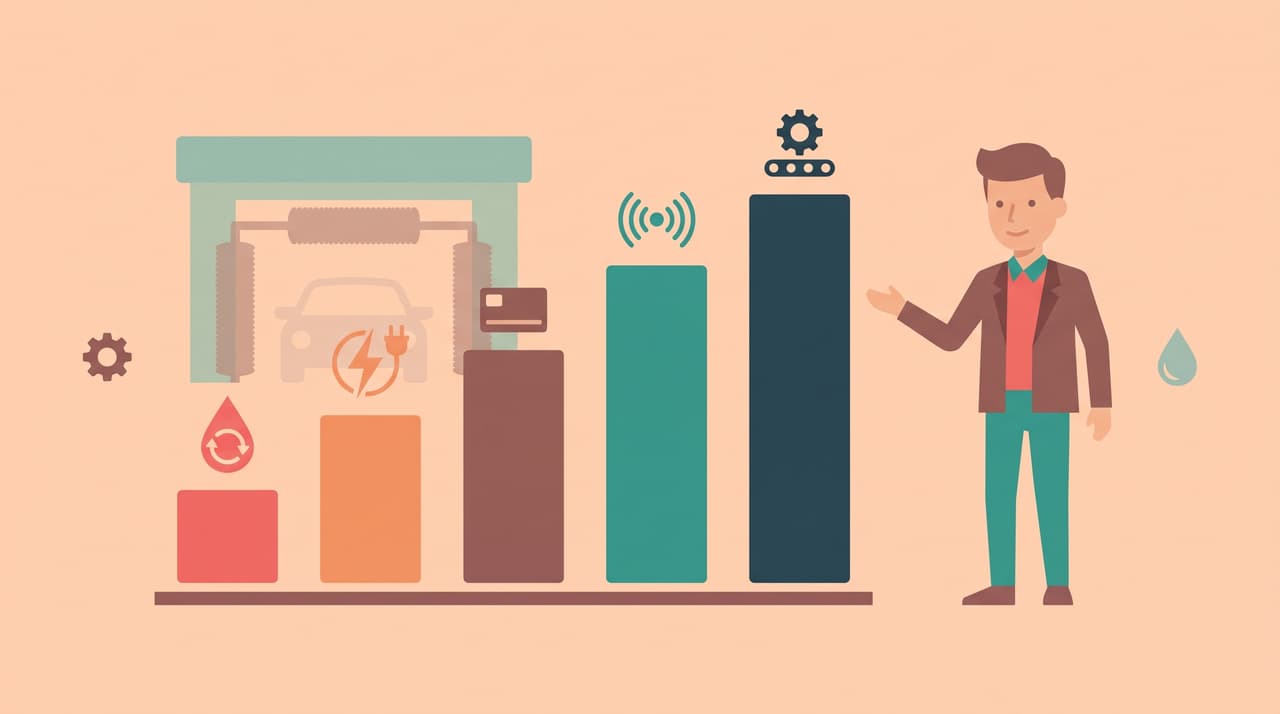
Five trends are shaping equipment decisions in 2026: automation and labor efficiency, water recycling technology, EV-compatible wash systems, subscription and membership models, and AI-driven smart technology. What automation delivers underneath all five is the same thing — labor hours removed from every wash, wash-to-wash consistency that does not depend on who is on shift, and uptime you can plan around.
Automation and labor efficiency — the trend the other four lean on. Fewer staffed positions per wash, and throughput that holds at peak.
Sustainability and water recycling — reclaim moving from a values statement to an operating-cost lever, and in some jurisdictions a permit condition.
EV-compatible wash systems — a growing share of the vehicle mix with specific handling requirements.
Subscription and membership models — recurring revenue reshaping how a site is valued, not just how it earns.
AI and smart technology — vehicle recognition, predictive maintenance, and site data that informs the next equipment decision.
Each is covered in full below. If what you are really after is the financial picture rather than the technology picture, our car wash industry profitability analysis covers margins, capital needs and financing by format.
1. Automation and Labor Efficiency
Labor remains the single biggest operational challenge for car wash operators. With wages rising and workers increasingly difficult to recruit and retain, automation has moved from a competitive advantage to a baseline requirement.
In the US, express exterior washes are now leading the industry's revenue growth. The shift reflects a fundamental change in the business model — away from labor-intensive full-service operations and toward streamlined tunnel systems that process 40–80 vehicles per hour on a fraction of the staff.
Modern operators specifying equipment should prioritize systems with:
- Remote monitoring capabilities that allow operators to manage multiple sites from a central location
- Self-diagnostic systems that identify maintenance needs before they cause downtime
- Automated chemical dispensing that reduces waste and ensures consistent results
- Touchless payment integration that eliminates the need for on-site cashiers
The ROI calculation is straightforward in shape, even though the numbers are local: automation converts a recurring labor cost into a one-time capital cost. Removing even two full-time positions changes the operating model, and how fast that pays back depends entirely on prevailing wage rates in your market — which is why the same system can look very different on two sites' spreadsheets.
2. Sustainability and Water Recycling Technology
Water scarcity regulations are tightening across the globe, and car wash operators face increasing pressure to demonstrate environmental responsibility. In drought-prone regions, access to water can determine whether a car wash can operate at all.
Advanced water recycling recovers and reuses a large majority of what a wash consumes — ultrafiltration with disinfection reaches roughly 80–90% reuse, and adding reverse-osmosis polishing takes a system past 90%. On a high-volume tunnel the saving compounds with every vehicle, and it shows up twice: in the water bill and in the sewer bill.
Beyond water, sustainability-focused equipment innovations include:
High-efficiency blower dryers that dry with moving air rather than heated air
Optimized chemical delivery that applies precise amounts based on vehicle size and soil level
Eco-certified cleaning solutions that meet increasingly strict discharge regulations
For operators specifying equipment, the sustainability calculation extends beyond operational savings. Many municipalities now offer expedited permitting for car washes with water reclaim systems, and environmentally conscious consumers actively seek out "green" wash options. HyTian's commercial vehicle solutions incorporate water recycling technology designed to meet the most stringent environmental requirements.
3. EV-Compatible Wash Systems
Electric vehicle adoption is accelerating faster than most industry observers predicted. The IEA's Global EV Outlook 2026 puts electric cars at around 28% of global car sales in 2026, with the share running higher in leading markets — so car wash operators are already washing a client base that increasingly drives battery-powered vehicles.
The good news: modern automatic car wash systems—both touchless and soft-touch rollover configurations—can safely wash electric vehicles when properly configured. However, operators specifying equipment should verify that any system they purchase addresses key EV considerations:
Appropriate pressure settings that won't damage charging port covers or sensor arrays
Undercarriage wash modifications that account for battery pack positioning
Clear client communication about EV compatibility to build driver confidence
Forward-thinking operators are also exploring opportunities to integrate EV charging stations with wash facilities, creating a compelling value proposition: charge your vehicle while it gets cleaned. This convergence of services could reshape gas station car wash operations as fuel retailers adapt to the electric future.
4. Subscription and Membership Models
The unlimited wash subscription has transformed car wash economics. What began as a client loyalty tactic has become the dominant revenue model for express exterior operations. Mister Car Wash, the largest US express chain, reported that members made up about 75% of its wash revenue by the end of 2024.
This shift has direct implications for equipment selection. Subscription models only work when clients perceive consistent value, which requires:
- High throughput capacity to minimize wait times during peak hours
- Consistent wash quality that delivers the same results on every visit
- Fast cycle times that respect members' time while maintaining cleaning performance
- Reliable uptime because every hour of downtime means disappointed subscribers
RFID tags and license plate recognition systems have become standard features, automatically identifying members and triggering their selected wash package. Operators specifying equipment should ensure their systems integrate seamlessly with modern point-of-sale and membership management platforms.
The financial impact is substantial. Unlimited plans are typically priced around $20–$40 a month, and industry surveys show 88–92% of members plan to renew. That steady, recurring revenue is what justifies investment in equipment able to handle higher volumes efficiently. Express tunnel systems designed for membership-heavy operations prioritize speed and consistency above all else.
5. AI and Smart Technology Integration
Artificial intelligence is moving from buzzword to practical application in car wash operations. The most impactful implementations focus on three areas:
3D vehicle profiling uses sensors to map each vehicle's exact dimensions and adjust wash parameters accordingly. This ensures SUVs, sedans, and trucks all receive optimized cleaning while reducing chemical waste and preventing potential damage from one-size-fits-all settings.
Predictive maintenance analyzes equipment performance data to identify components likely to fail before they cause unexpected downtime. The value is not that it eliminates maintenance but that it moves work out of the unplanned column and into a scheduled window. An outage during a Saturday peak costs revenue you never recover; the same service performed on a Tuesday morning costs almost nothing.
Operational analytics provide insights into peak traffic patterns, popular service packages, and client behavior trends. This data enables smarter staffing decisions, targeted marketing, and continuous optimization of the wash menu.
The most significant technology shift in 2026 isn't about washing cars better—it's about generating actionable data that helps operators make smarter business decisions across every aspect of their operations.
What This Means for Equipment Operators
Smart operators specifying equipment in 2026 aren't just purchasing car wash systems—they're investing in platforms that can adapt to changing consumer expectations, regulatory requirements, and technology advances over the long working life of the equipment.
When evaluating equipment options, consider:
- Modularity and upgrade paths: Can the system accommodate new features without complete replacement?
- Total cost of ownership: Factor in utilities, maintenance, chemical consumption, and labor—not just purchase price
- Future-proofing: Is the equipment EV-compatible and smart-technology ready?
- Manufacturer support: Does the supplier offer training, preventive maintenance programs, and responsive parts availability?
With over three decades of engineering expertise since 1992 and installations across 40+ countries, HyTian partners with operators to match equipment specifications to specific business models, site constraints, and growth objectives.
Frequently Asked Questions
What are the biggest car wash industry trends in 2026?
The five biggest trends are increased automation to address labor challenges, water recycling and sustainability technology, EV-compatible wash systems, subscription-based business models, and AI-powered operational optimization.
How is automation changing the car wash industry?
Automation enables car washes to operate with fewer staff while increasing throughput. Modern express tunnel systems can process 40–80 vehicles per hour on a fraction of the staff a traditional full-service operation needs.
What should I look for when buying car wash equipment in 2026?
Prioritize equipment with water recycling capabilities, EV compatibility, smart monitoring systems, modular upgrade paths, and strong manufacturer support. Evaluate total cost of ownership including utilities, maintenance, and labor—not just purchase price.
Are touchless car washes better for electric vehicles?
Both touchless and modern soft-touch systems can safely wash EVs when properly configured. Key considerations include appropriate water pressure settings and ensuring charging port areas are protected during the wash cycle.
Investing in the Future
The car wash industry's evolution shows no signs of slowing. Operators who invest in equipment aligned with these five trends—automation, sustainability, EV compatibility, subscription readiness, and smart technology—will be positioned to capture market share and generate strong returns for years to come.
Ready to explore equipment options tailored to your specific operation? Contact HyTian's team for a consultation, or browse our complete product lineup to see how our tunnel, rollover, touchless, and specialty wash systems address today's most pressing industry challenges.
Related articles
Explore more insights from the HyTian team.
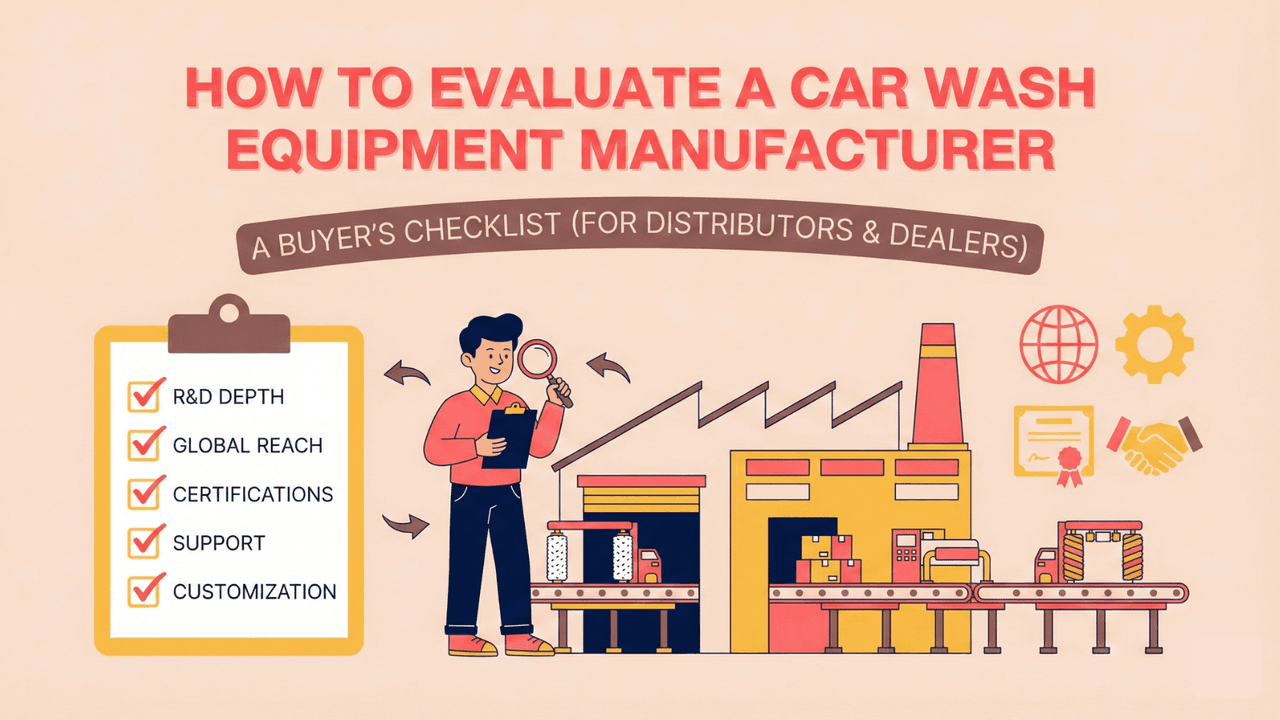
How to Evaluate a Car Wash Equipment Manufacturer: A Buyer's Checklist
A practical buyer's checklist for distributors and dealers evaluating a car wash equipment manufacturer. Learn what to look for in engineering capability, certifications, after-sales support, and global track record before committing to a factory partnership.
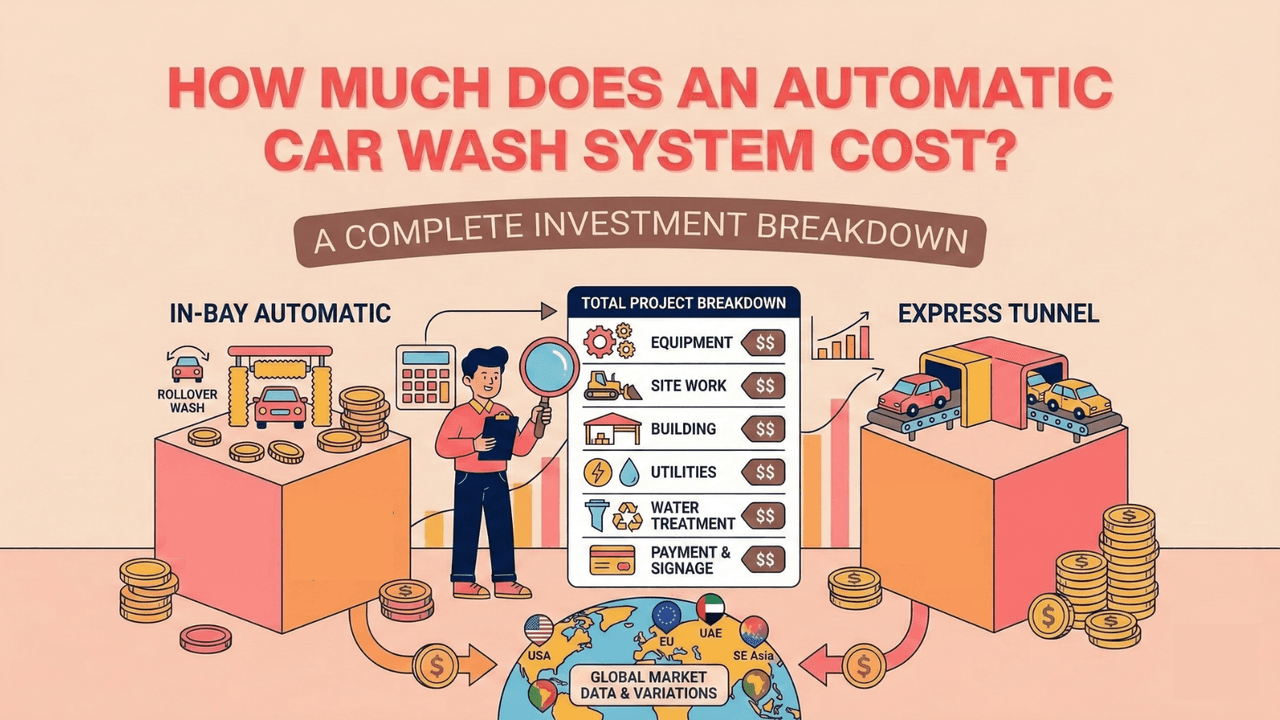
How Much Does an Automatic Car Wash System Cost? A Complete Investment Breakdown
Automatic car wash system costs range from $15,000 to $350,000+ for equipment alone. Here's what drives the price, what the total investment looks like, and how to compare quotes.
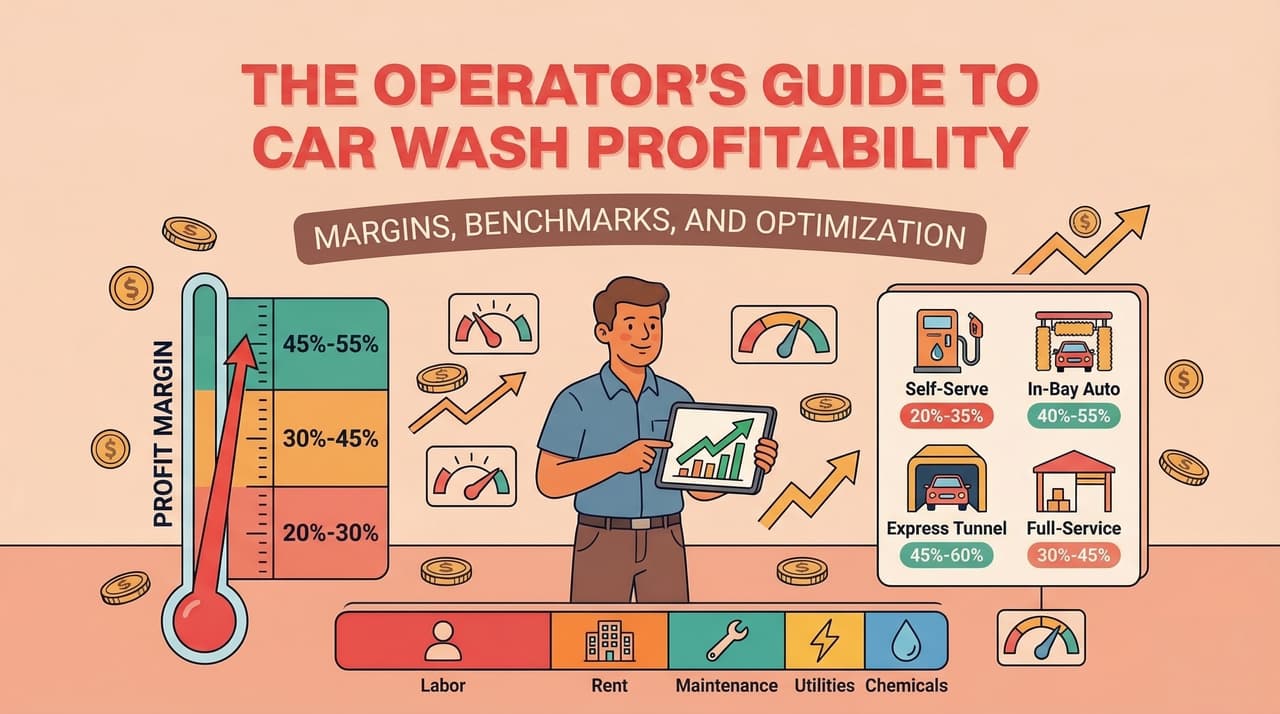
The Operator's Guide to Car Wash Profitability: Margins, Benchmarks, and Optimization
Car wash profit margins by format: 35–55% self-serve, 30–50% in-bay automatic, 25–40% express tunnel, 30–45% full-service with detailing, and what moves each.